
Restorative & Crisis Care Certification Course Combo
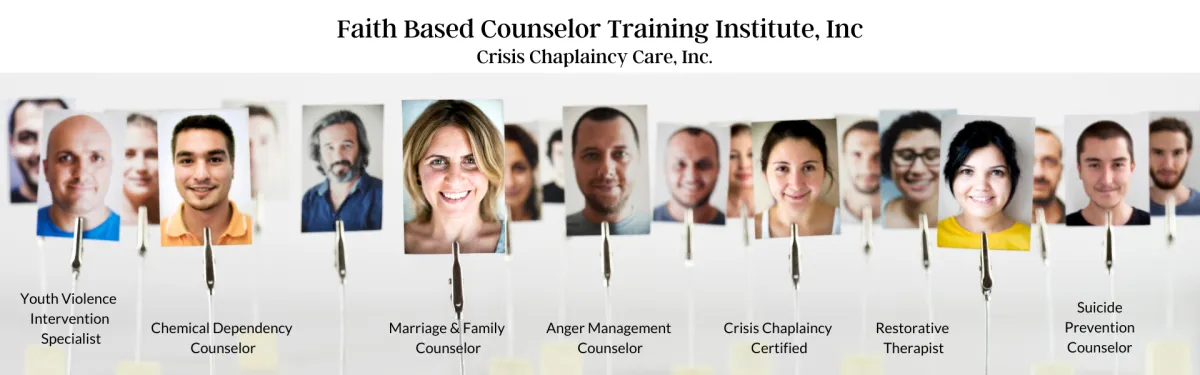
Crisis Chaplaincy Training Course Teaches
A Chaplain is a front line minister. He or she deals with the hands on Spiritual support of all the points of crisis intervention. A Chaplain needs to be trained in how to minister in the midst of a critical incident. The Chaplain brings the Spiritual component into crisis intervention. Training for the Ministry of Presence is in the forefront of preparing for Chaplaincy and not everyone can be in the middle of a terrible event and not know how to work with the victims involved at the time of the event. There are things you do and do not do as a Chaplain and the person working in ministry certainly needs to be educated and credentialed to know what to do. The Chaplain can go where other Ministers and Caregivers cannot go. The Chaplain can go beyond the yellow ribbon and work with victims and first responders alike. This is why the Spiritual Link in crisis intervention is missing. There are not many experienced and trained Chaplains available. Your community desperately needs you.
Restorative Therapy Course Teaches
Looking To Start Your Own Counseling Practice Or Just Want to Know How To Help Others Who Are Hurting.
A counselor works on the backside of a crisis. The backside is what happens to a person who has been traumatized and the need for helping victims to be able to work through the crisis and why it happened is the counselors job. Counselors help people who hurt for a variety of problems that occur from just living life. Counselors have a much more settled base than Chaplains. They are trained to get behind the eyes of their clients to find the core or the root cause of the problems their clients are dealing with. Counselors need to be trained in a much broader scope of life controlling issues in order to be able to work with the people affected that they will be helping. The established treatment industry mainly deals with the dichotomy of the hurting person. Dichotomy simply means the body and soul. Most often the trichotomy is left out. The Spiritual component is the missing link that the Faith Based approach helps connect.
Basic Certification Course Includes All Of The Following Components
Foundational Principles for Faith-Based Counseling
The Counseling Model of Restorative Therapy™/ How Jesus Related to People/Ten Actions for Effective Counseling/ The Difference Between Roots and Fruits/ Listening on the Inner Level/ The Principle of Trichotomy
Five Basic Steps for Counseling Inmates and Their Families
Introduce Them to the Saving Knowledge of Christ/Invest Time Helping Them to Meet Their Physical and Emotional Needs/ Inform Their Parents About Biblical Family Principles/Instruct Them How to Learn From Current Trials/ Impart Encouragement At Every Opportunity/Six Principles of Understanding the Inmate Mentality
Counseling in the Crisis
Overview of Critical Incident Stress Management-Debriefing/ Crisis Intervention/ Lessons Learned from Ground Zero/ Understanding the Suicide Mentality/ Counseling the Victims of Crime/ Victomology 101/ Traumatology/ What to Do and Not To Do When Counseling Victims
Establishing a Faith Based Counseling Center
The Difference Between a ‘Faith Based’ and Secular Center/What Makes a Professional Atmosphere/Setting Up Crisis Referral System/ The Importance of Confidentiality/Marketing Your Minitry/The Necessity of Administrative Housekeeping/The Importance of Personal Growth
Chemical Dependency
Counseling in an Addicted Society/ Steps To Effective Prevention/ Signs and Symptoms of Drug Abuse/ Faith-Based Recovery Issues/ The Mechanics of Recovery/ Drug Education 101/ Relapse Dynamics
Marriage and Family Counseling
A Marriage for All Seasons©/ Avoid Conformity/ Accent Communication/ Appreciate Oneness/ Arrest Infiltrators/ Amplify Prayer/ Abide Above/ Blended Family Issues/ Family Secrets
The Games People Play
Blame Game/ Switching Focus Game/ Superman Game/ Poor Me Game/ Intimidation Game/ Beating Around the Bush Game/I Am Nothing Game/ I’m Bad Game/ King Baby Gamé/ Silent Lie Game/ How The Games Interlock/ How to Effectively Recognize and Counseling Game Players
Primary Functions of the Faith Based Counselor
The Screening Process/ The Intake Procedure/ The Orientation Period/ The Assessment Procedure/ The Recovery or Treatment Plan/ The Counseling Period/ The Case Management Process/ The Crisis Potential/ The Client Education Provision/ The Referral Procedure/ The Record Keeping Process/ The Networking Process/ Ethical Standards
Anger Management
Conquering Anger.com / The Face of Anger/ What is Anger/ Physiological Effects of Anger/ Neuron Communication/ How Does Anger Work/ When is Anger a Problem/ Can Anger be Controlled/ Brain Chemistry and Learned Behavior/ Brain Stapling
Proper Nutrition as it Relates to Stress and Counseling
Wellness Programs/ The Spark Study/ Stress Management Related to Health and Nutrition/ Tips for Controlling and Reducing Stress/ Coping With Everyday Problems/ Treating the Cause and Not the Symptom/ Nutritional Deficiencies and How They Effect the Behavior/ The Silent Killer/
Price
$497
faq
STILL NOT SURE?
RESTORATIVE THERAPIST
What is a Restorative Therapist?
A Restorative Therapist is a counselor that uses the faith based certification program for training as opposed to the established treatment training program for counseling clients who come to them.
A Chaplain is more of a first responder than a back row counselor who usually i the time consuming. trainer more so than the first responder in ministry.
A Restorative Therapist is a counselor who takes more time to find out why the client is overcome by the problem they are there for. The Chaplain works with the client during the crisis and the counselor spends more time getting the background of how the crisis has affected the client from what the crisis is.
To Restore means to pat back in order that which is broken or torn down and have a better end than was at the beginning.
A person would need a restorative therapist when the client's problems are more extensive than at the time of the actual crisis when a Chaplain would be needed.
Crisis Chaplaincy Training Course Teaches
Yes. If you set up a practice in your home, in an office atmosphere, in a church or your community or even online. That is up to what works best for you. The average cost of a Restorative Therapist is $85 to $150 per session.
The FBCTI Basic Restorative Therapy course trains a person on the exact needs one has to become and effective therapist and really changing lives. The course sets out guidelines for a person to become certified and thoroughly trained to set up their own business as a Restorative Therapist. FBCTI's course are driven to assist people who want to start their own practice and be sure they know each step in the process.
Yes, but you will need to be trained and certified through FBCTI.
Yes, but when you get such an expanded territory you will need to be fully trained. Online opens many doors today for people seeking to help more people than just their local sphere of influence.
What you learn from the certification will help you build your client schedule be proof of your training and teach you how to use the FBCTI platform to Manage your schedule, Manage your business, and each section of how to build you practice. More when you are exposed to the certification itself.
STILL NOT SURE?
CRISIS CHAPLAINCY
What is a Chaplain?
A Chaplain is someone who is trained to work in a ministry capacity to help people who are hurting or in need of spiritual care. They have a special calling to go out among people of all denominations and faiths to bring healing in critical situations.
What does a Chaplain do?
A Chaplain is on call physically to be of service in whatever a person needs spiritually. They have a ministry of presence in that they represent God in the midst of His people.
Who can become a Chaplain?
Anyone who has a deep calling to help people who are hurting.
What is Crisis?
A crisis is an event that happens in a person's life that is out of their control.
When does a crisis occur?
A crisis can occur at any time to anyone. There are NO boundaries to the occurrence of a crisis.
What is the difference between a Pastor and a Chaplain?
Crisis Chaplaincy Training Course Teaches
A Chaplain is a front line minister. He or she deals with the hands on Spiritual support of all the points of crisis intervention. A Chaplain needs to be trained in how to minister in the midst of a critical incident. The Chaplain brings the Spiritual component into crisis intervention. Training for the Ministry of Presence is at the forefront of preparing for Chaplaincy and not everyone can be in the middle of a terrible event and not know how to work with the victims involved at the time of the event. There are things you do and do not do as a Chaplain and the person working in ministry certainly needs to be educated and credentialed to know what to do. The Chaplain can go where other Ministers and Caregivers cannot go. The Chaplain can go beyond the yellow ribbon and work with victims and first responders alike. This is why the Spiritual Link in crisis intervention is missing. There are not many experienced and trained Chaplains available.
Restorative Therapy Course Teaches
Looking To Start Your Own Counseling Practice Or Just Want to Know How To Help Others Who Are Hurting
A counselor works on the backside of a crisis. The backside is what happens to a person who has been traumatized and the need for helping victims to be able to work through the crisis and why it happened is the counselors job. Counselors help people who hurt for a variety of problems that occur from just living life. Counselors have a much more settled base than Chaplains. They are trained to get behind the eyes of their clients to find the core or the root cause of the problems their clients are dealing with. Counselors need to be trained in a much broader scope of life controlling issues in order to be able to work with the people affected that they will be helping. The established treatment industry mainly deals with the dichotomy of the hurting person. Dichotomy simply means the body and soul. Most often the trichotomy is left out. The Spiritual component is the missing link that the Faith Based approach helps connect.
Can I make money as a Chaplain?
It depends on where the Chaplain's ministry is located. There are agencies who hire Chaplains such as hospitals and other places who work with the needs of the people.
How do I start my Chaplaincy ministry?
Starting depends on training. You can start as a Chaplain when you are certified and trained with courses such as Crisis Chaplaincy Basic Care Course offered here. After training, you can look for position with an agency or local organizations and churches.
Can I join an organization for Chaplains?
There are numerous organizations that you can join. Most are online.
Is the Certification I receive a License?
License is a credential term used by government organizations. Certification is a credentialed term used by religious organizations which operate separate from the government State rules and requirements. You will have the credentials and certification upon completion.
Is their an age limit?
The age limit would be 18 and over.
STILL NOT SURE?
CREDENTIAL
What does the house bill 2481 that came about in 1997 in Texas mean for the Faith Based Community?
House Bill 2481 was passed in 1997 to expand the faith community in the non-profit status in order to be able to offer accreditation as a religious school or program to work with people with addictions known as chemical dependency training. This was just the beginning of the faith community opening up into the secular arena and being able to become credentialed because of the 501c3 organizations.
What do my Faith Based credentials mean to other people and organizations?
The FBCTI Training Credentials simply mean that you have received the highest and most sought after training available and can be trusted to know what to do for victims of crisis or what to say and do in a counseling setting.
Will my credentials be accepted in hospitals or the VA's?
You will be recognized just as a pastor’s license that is given by a religious organization you will be accepted as the same. It will depend on the administration of a hospital or VA if you intend to volunteer your services or be paid for your services. With some groups yes and others no. It just depends on whoever is running the facility.
Can I open my own counseling practice with my credentials and charge money for counseling?
Yes, you can open your own practice. That is one of the benefits of the training and certification. Yes, you can charge money and we will show you how to set that up.
What are my liabilities by opening my own practice? And do I need insurance?
You can open your own practice with or without the certification FBCTI offers. However, the more training you can receive the less vulnerable you are; Anyone licensed or without can be sued. You can get insurance if you want but liabilities are the same. FBCTI training shows you some of the answers and some of the basic things counselors need to know to avoid those pitfalls.
Can I be sued for malpractice if I have a Faith Based Credential?
You can be sued if you have a State License. Credentials do not protect anyone from being sued.
Do my credentials hold weight in my community? My church? Schools?
Certification indicates credibility. It holds weight with church, schools, etc. Certification has much to do with who you are and what you have accomplished.
How will my credentials get me accepted into the First Responder community?
This is what first responders look for. Someone who has been trained. Training like Crisis Intervention will open doors much faster
What do I do when I show up at a crime or crisis scene with my credentials?
The answer to this question is covered extensively in the FBCTI training.
Explain the difference between the established treatment licensed industry versus the faith-based industry?
The ETI has nothing to do with faith in explaining the solutions to problems that people have difficulty overcoming. ETI began in the 1930s and 40s and the Faith Based industry has been around for thousands of years. The ETI most often goes straight to mind and body only, the faith based goes to those areas along with the Spirit, that is the missing link in the ETI establishment.
What does being credentialed through FBCTI mean?
Means you picked the oldest and most attended school of it’s kind. FBCTI’S credentials are widely recognized globally. FBCTI is also here to join you in your journey beyond your basic training. We offer you our platforms and our affiliate schools to be a part of.
Will my church recognize these credentials?
More than you know. Our teachers and Founder has been doing this work for over 50 years and the reputation of our school is worldwide.
Since the House bill was in Texas does that mean it is the same in every state? Country?
Started with the Governor of Texas George W. Bush, then when he became the President of USA it went into every state, then 90% worldwide.
Get In Touch
Email: [email protected]
Address
Office: 4951 FM 346
Assistance Hours
Mon – Sat 9:00am – 8:00pm
Sunday – CLOSED
Phone Number:
(970) 306-3151
FBCTI
Lorem ipsum dolor sit amet, consectetur adipiscing elit.
© 2026 FBCTI.org - All Rights Reserved
